In 20th century the world witnessed a Cold War between two ideological opponents (i.e. America & USSR), but the people with ideological differences helped India attain freedom! How was that possible?
Let’s shed some light on how humanity has used this beautiful legacy of ideologies!
The Hindu Militarisation Drive
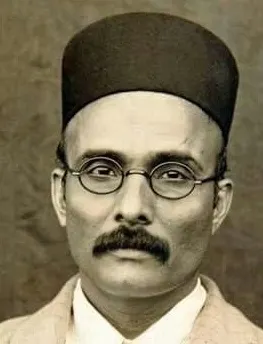
Veer Savarkar
In the pre-Independence period of India, it was a long-standing demand of Vinayak Savarkar (Commonly known as ‘Veer Savarkar’) to militarise Hindus, especially considering the imbalance in the number of Muslims over Hindus in the then Indian Army. He openly promoted this demand even during the time when his ideological opponent Mohandas Gandhi (Commonly known as ‘Mahatma Gandhi’) launched ‘Quit India’ movement in 1942. This stance of Savarkar brought him a lot of criticism from his opponents citing the act as communal in nature. However, his efforts bare fruits and the number of Hindus in Indian Army increased.
Azad Hind Fauj
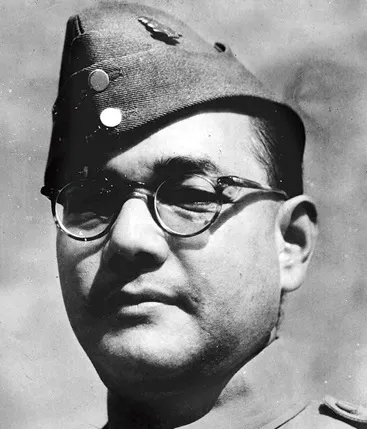
Netaji Subhash Chandra Bose
After resigning from his post as a President of Indian National Congress in 1939, Subhash Chandra Bose (Commonly known as ‘Netaji Subhash Chandra Bose’) set on a mission to free India from the British rule. This led him to revive the Indian National Army (INA, also known as ‘Azad Hind Fauj’) in the year 1943.
Netaji convinced the Japanese to release the Indian war prisoners so that they can wage a war against the British. The plan was to attack the easter frontiers of India starting from 1944. Netaji’s move was very brave; however, the attack was averted by British and in 1945 the INA soldiers surrendered. All the efforts might seem to have failed but they succeeded in causing the events that I have elaborated below in the next section, the impact of which was crucial to end the British rule in India.
The Red Fort Trials
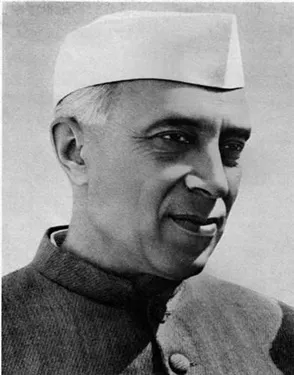
Pandit Jawaharlal Nehru
Soon after the surrender, the ‘Red Fort Trial’ began. This was when the leaders like Jawaharlal Nehru came into the support of the INA soldiers. As the hearing was made public, they gathered huge crowds by spreading awareness about the deeds of these soldiers and their ongoing persecution.
The strong ‘Anti-Persecution’ sentiment created by their fiery speeches was soon evident to the government. The government that was already at war (World War II), did not want any uprising in India, had to issue orders to go ‘liberal’ in the Red Fort Trials. Consequently, the verdict initially pronounced a life sentence to the three acquitted members of the INA but owing to the public sentiment had to release them later. This was a giant victory as the brave sons of the mother land were saved!
Besides the Politics of Savarkar, Gandhi, Nehru & various other leaders of that time, the Red Fort trials and the mighty roar of Royal Indian Navy against the British in 1946 were significant events that loosened the grip of British rule in India.
Connecting the dots
Perhaps, many would oppose the idea of including these three contrasting personalities (Savarkar, Bose & Nehru) in a complementing way in single article, but the fact that their ideologies were useful when the time demanded and created this beautiful result cannot be denied.
It will be difficult but not impossible to draw a conclusion that Hindu Militarisation drive started by Veer Savarkar (Who was known as the father of ‘Hindutva ideology’) benefitted Netaji (who was known to be a Staunch Communist) in a sense that when he asked for ‘Blood against freedom’ (‘Tum Mujhe Khoon Do, Main Tumhe Azadi Doonga’) he got many heads ready. Which might have been otherwise in case the war prisoners were from the separatist group that divided India into two.
The fall of Indian National Army and the Red Fort trials helped Congress leaders like Nehru (Who believed in Non-violent Socialist ideology) pump the Nationalistic feelings in the minds of Indians which ultimately resulted in this victory.
What did we Learn?
The world we live in today, the ideologies are often considered to be the point of difference amongst many, yet if we look closely we find many examples where these differences actually complement each other, like a capitalist economy adopting socialist methods for the welfare of its labours, Communist state promoting Controlled Capitalism for the development of its economy or as elaborated in the events above. It can be said that along with the course of time, humanity has learnt to pick and apply what is most beneficial in an ideology.
Although, intolerance towards religious diversity (Which is nothing but a form of ideological diversity) continue to haunt the human society, the generations that passed had seen much clear ideological distinction than what we see today and perhaps the coming generations will see it blurred further.
Thus, I can conclude that human society evolves continuously and keeps refining these ideologies to adjust in accordance with the contemporary world. And those that cannot evolve, fades away like a memory.
This is what keeps this beautiful legacy relevant for the future!